How to Write Your First Spell: A Step-by-Step Formula
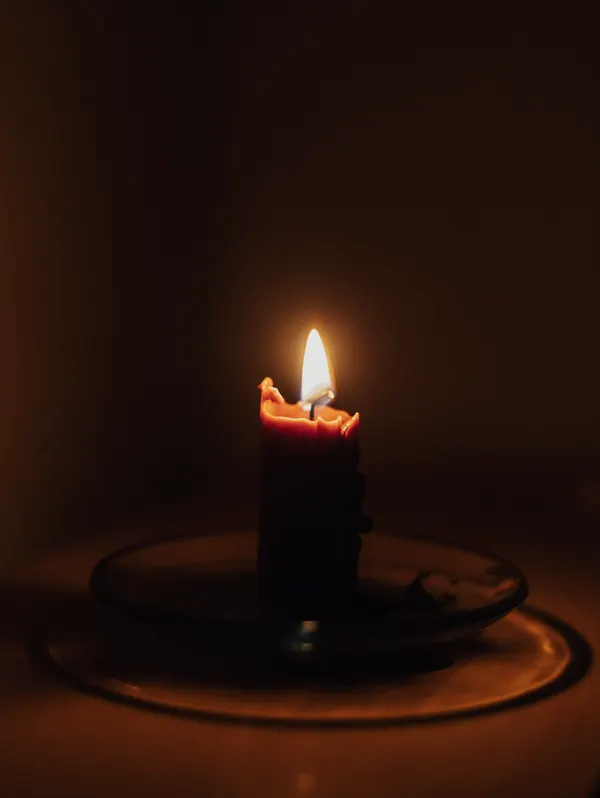
Here is a secret the spell books do not advertise: the most powerful spells are rarely the ones you copy. They are the ones you write yourself, in your own words, for your own specific situation, because a spell is really just an intention given a body. Learn the anatomy once, and you can build a spell for anything, forever, without waiting for someone else’s book to cover your exact problem.
Every working spell, across nearly every tradition, has the same skeleton. Scholars of folk magic sometimes call it intention, raising, and release. Think of it like archery: you choose the target, you draw the bow, you let the arrow fly.
Step 1: Name the target (intention)
Vague spells produce vague results. “I want things to be better” gives the universe nothing to hold onto. “I want a calm, focused mind for my exam on Friday” is a target.
Write your intention as a single clear sentence, in the present tense, as if it is already true: “I walk into the interview calm and confident.” Then check it against three questions. Is it specific? Is it about you and your own actions (spells aimed at controlling other people are both unethical and unreliable)? And would you be genuinely glad if it worked? If the answer to all three is yes, you have your intention.
Step 2: Choose your ingredients (correspondence)
Ingredients are not about expense; they are about resonance. Pick two or three things that point at your intention the way signposts point at a town:
- A candle in a color that matches your goal (green for prosperity, pink for self-love, white for anything when you are unsure)
- An herb or scent from your apothecary (rosemary for clarity, lavender for calm, cinnamon for quick energy)
- A personal link like a written sentence, a photo, or an object connected to the goal
- Timing if you want it: the right planetary day, a waxing moon for growth, a morning hour for beginnings
Write down why you chose each one. That written reasoning becomes part of the spell’s logic, and it teaches you correspondences faster than any chart.
Step 3: Build the container (casting)
This is the part people picture when they picture witchcraft, and it can be as simple or as ornate as you like. A basic structure:
- Cleanse the space. Tidy the table, light some incense or ring a bell, take three slow breaths. You are marking a boundary between ordinary time and spell time.
- State the intention aloud. Read your sentence. Hearing your own voice say it changes it from a thought into a declaration.
- Raise energy. This is the “drawing the bow” part. Focus on your intention while you do something that builds intensity: rub your hands together until they tingle, dance, chant your sentence, breathe faster. You are gathering your attention into a single bright point.
- Direct it. Light the candle, hold the herb, visualize the outcome as already real. Pour that gathered focus into the objects, the flame, the words. See it, feel it, and then let the peak pass naturally.
- Release and close. Say something that ends it: “It is done.” Blow out the candle or let it burn safely down. Put the objects away or carry the charm with you. Then, crucially, stop thinking about it. A watched pot never boils, and a worried-over spell never lands.
Step 4: Record and review
Write the whole thing in your grimoire or journal: the date, the moon phase, the intention, what you used, and what happened over the following weeks. This is how folk magic has always been refined, one practitioner’s notes at a time. Your book of shadows is allowed to contain failures; the witches who came before you filled whole volumes with “tried this, did not work, trying that instead.”
The beginner mistake to skip
Do not cast the same spell every night for a month. Repeating a spell from anxiety is like planting a seed and digging it up daily to check on it. Cast once, cast well, and then act in the physical world as if the spell is already working: send the application, make the call, do the thing. Magic opens doors; you still have to walk through them.
Your first spell will probably be small and a little clumsy, and that is exactly right. The witches with the impressive altars all started with a candle, a sentence, and a racing heart. Write yours tonight. Date it, keep it, and a year from now you will read it back and see the exact moment your craft began.
Keep walking the path: explore the Spellcraft hub for the full discipline, read The Eclectic Witch Starter Guide if you like building your own way, or take Where Should I Start? to find your first step.