Mirror Magic and the Shadow Self
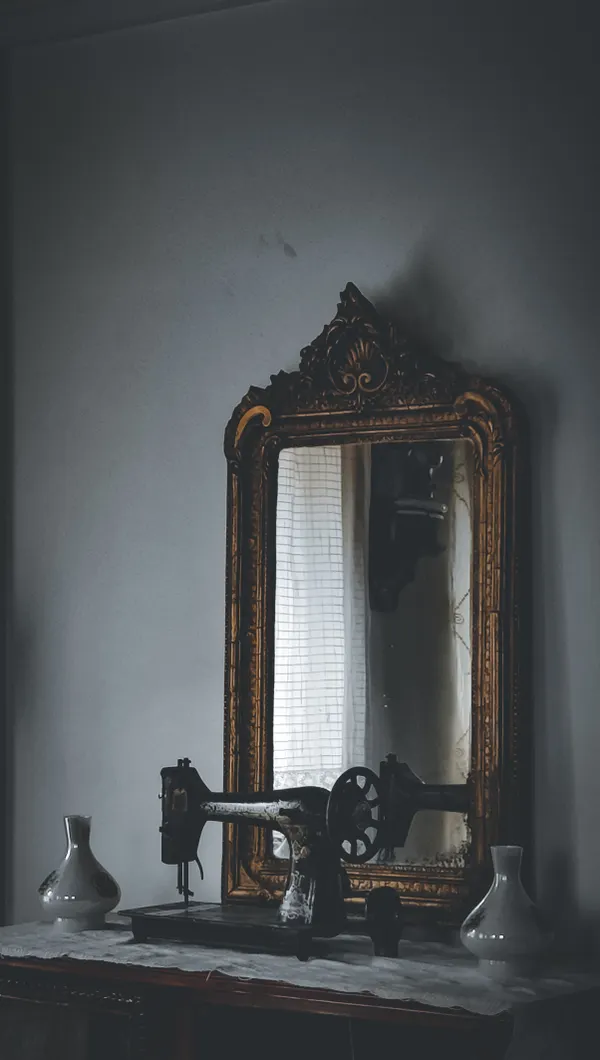
There is a reason folklore is full of mirrors that show the truth: the mirror does not flatter, does not explain, does not look away. It shows what is there. For witches doing shadow work, the mirror is both the scrying glass and the confrontation, a tool for seeing the self without the usual soft filters. Imbolc, with its candles in the dark and its promise of returning light, is a fitting season to pick it up.
Mirror magic has old roots. Catoptromancy, divination by mirror, appears in ancient Greek and Roman sources, and folk traditions across Europe treated mirrors as liminal objects: covered during mourning, consulted for visions, believed to hold reflections of more than the room. The modern witch inherits all of this and adds a psychological dimension the ancients would have recognized instantly. To gaze into a mirror in a darkened room and ask to see truly is to invite the shadow to introduce itself.
The practice: mirror gazing
You need a mirror (handheld is traditional, but any will do), a darkened room, and one candle placed to the side so your face is half lit. This is important: full bright light keeps you in ordinary self-assessment mode (“is my hair okay”), while dim, flickering light softens the familiar and lets the unfamiliar surface.
1. Settle. Sit comfortably with the mirror at eye level. Take slow breaths until your shoulders drop. State your intention quietly: “I am willing to see what is true.”
2. Soften your gaze. Look at your own eyes, but do not stare hard. Let your focus go slightly soft, the way you would looking at one of those magic-eye pictures. Blink normally.
3. Watch without narrating. After several minutes, most people notice shifts: the face seems to change, age, become unfamiliar, or show expressions you did not consciously make. Do not grab at these moments. Simply notice. If emotion rises, let it. The shadow often arrives as feeling before it arrives as thought.
4. Ask one question. When you feel ready, ask the reflection something honest: “What am I not admitting?” or “What do you need me to know?” Then be quiet and listen to what surfaces, whether as words, images, or sudden knowing.
5. Close gently. Thank yourself (yes, really), cover the mirror or turn it face-down, and ground: drink water, touch something solid, write down what you experienced. Do not analyze the session to death the same night. Let it settle.
Start with ten minutes. Work up to twenty or thirty over weeks. This is potent practice; treat it with the respect you would give any deep water.
The shadow in the glass
What surfaces in mirror work is often shadow material: the grief you have been performing cheerfulness over, the anger you call stress, the part of you that is tired of being the strong one. The mirror’s gift is that it shows these things without the story you usually wrap them in. You cannot argue with your own face the way you can argue with your own thoughts.
When something difficult appears, resist the urge to fix it on the spot. Shadow work’s first move is always witnessing, not solving. Write down what you saw. Sit with it for a few days. Ask what it needs. Often the shadow does not want a solution; it wants acknowledgment. “I see you. You make sense. You can put down the megaphone now.”
The old mirror rules
Folk tradition wrapped mirrors in etiquette, and some of it is worth keeping. Cover mirrors in a house of mourning, the old custom said, so the grieving would not catch their own anguish unawares, and so the newly dead would not linger in the glass. Never scry in a mirror when you are frightened or frantic; the glass amplifies whatever you bring to it. Keep your working mirror dedicated to the work, stored wrapped and separate from the mirror you use to check your teeth.
These rules share a single logic: the mirror is treated as an active participant, not a passive tool. Whether or not you believe the glass holds anything, behaving as if it deserves respect changes how you behave in front of it, which is rather the point. Approach the mirror the way you would approach a wise, blunt elder. The quality of your attention determines the quality of what looks back.
A dark moon mirror ritual
On the dark moon, try this fuller working. Light a black candle beside your mirror. Write one pattern you are ready to release on a slip of paper. Gaze into the mirror and speak the pattern aloud, past tense, as something you are done carrying: “I carried the belief that I must earn rest. I am putting it down.” Burn the paper safely in a fireproof dish. Then look into the mirror again and speak one true, kind thing to the face looking back. Cover the mirror. Ground well.
Mirrors in folklore were covered after death so the soul would not get lost in them, and there is a gentleness in that old custom worth borrowing: when the work is done, the mirror rests. You have looked long enough. Go easy on the face in the glass. It has been carrying you this whole time.
Keep walking the path: explore the Shadow Work hub for the full discipline, read The Eclectic Witch Starter Guide if you build your own rituals, or take Where Should I Start? to find your first step.