The World Tree: Mapping the Three Worlds of the Hedge Witch
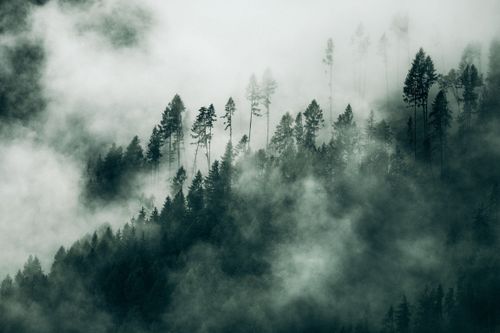
Every traveler needs a map, including travelers who cross the hedge. The three-world cosmology, upper world, middle world, lower world, connected by a great tree or pillar, is the standard map of the hedge witch’s territory. It appears in Norse myth as Yggdrasil, the ash tree whose branches hold the heavens and whose roots reach the underworld. It appears in Siberian and core shamanic traditions as the world tree or world pillar climbed by the journeyer. Michael Harner’s The Way of the Shaman (1980) popularized the three-world model for modern Western practitioners. Different cultures, same architecture: the cosmos has an up, a middle, and a down, and there is a tree that connects them.
You do not need to believe in a literal tree. Treat the map the way a sailor treats a chart: as a working model that helps you navigate experiences that are otherwise disorienting. Here is the territory.
The lower world
Reached by going down: through a hollow tree, a well, a cave, a burrow, a pool. The lower world is the realm of nature spirits, animal guides, the deep earth, and the ancestral dead in many traditions. Journeys here tend to feel earthy, ancient, and embodied. Practitioners typically travel to the lower world for healing work, for meeting power animals or spirit guides, for retrieving lost vitality, and for questions rooted in the body and the instincts.
The lower world is often the most welcoming to beginners, perhaps because its imagery, forests, caves, clearings, animal encounters, is the closest to the dreaming mind’s native language. If your journeys keep taking you underground without your planning it, follow. The map is descriptive, not prescriptive.
The middle world
The middle world is this world, but seen in spirit: the same landscape overlaid with its spiritual dimension. In middle world journeying you might visit a distant location in spirit, perceive the energy of a place or a house, or meet the spirits of the land where you live. It is also, traditionally, the world where less friendly entities hang about, which is why middle world work gets the strongest safety advice: go with a clear purpose, maintain your protections, and do not go sightseeing in other people’s spiritual territory without reason.
For the hedge witch, the middle world is home ground between journeys. Learning to perceive it, the spirit of your own garden, the presence in an old building, the mood of a forest, is a practice in itself, and it requires no trance at all. Just attention.
The upper world
Reached by going up: climbing the tree, rising on smoke or a bird’s wings, ascending a mountain of glass or a rainbow bridge. The upper world is the realm of teachers, guides in human or radiant form, celestial beings, and big-picture wisdom. Journeys here tend to feel luminous, vast, and abstract. Practitioners travel to the upper world for guidance on life direction, for philosophical or spiritual teaching, and for perspective on problems that look different from a great height.
Upper world journeys can feel less personal than lower world ones. The teaching may arrive as pure knowing rather than conversation. Write it down anyway; upper world insights have a way of unfolding their meaning over weeks.
The tree in your own practice
You can work with the world tree without ever entering trance. Plant an actual tree, or adopt one: visit it regularly, leave offerings at its roots, meditate with your back against its trunk. Many hedge witches keep a small tree image or carving on the altar as the axis of their working space, a reminder that every ritual stands at the center of the three worlds. Standing meditation as the tree, roots sinking, branches rising, breath moving between, is a complete grounding practice on its own. The cosmology is not only a map of elsewhere; it is a posture you can take in your own body, anytime.
Using the map in practice
Before a journey, decide which world your question belongs to. Healing, guides, and instinctual questions point down. Questions about places, people, or present-life situations point to the middle. Questions of purpose, direction, and spiritual understanding point up. Then use the corresponding doorway imagery as you cross: down through the roots, across through the hedge, up through the branches.
Meet the residents with manners. Introduce yourself, state your purpose, ask whether a being is willing to speak with you, and thank it afterward. The etiquette of the otherworld mirrors the etiquette of this one: the polite traveler is welcomed back.
Over time, you will develop your own geography: a lower world clearing you return to, an upper world teacher who knows your name, a middle world route you walk in spirit. The generic map becomes personal territory, and that is when hedge riding stops being a technique and becomes a relationship. The tree has been waiting. Climb.
Keep walking the path: explore the Hedge Riding hub for the full discipline, read The Hedge Witch Starter Guide if the boundary calls to you, or take What Kind of Witch Are You? to find where you belong.