Tarot 101: How to Read Your First Three-Card Spread
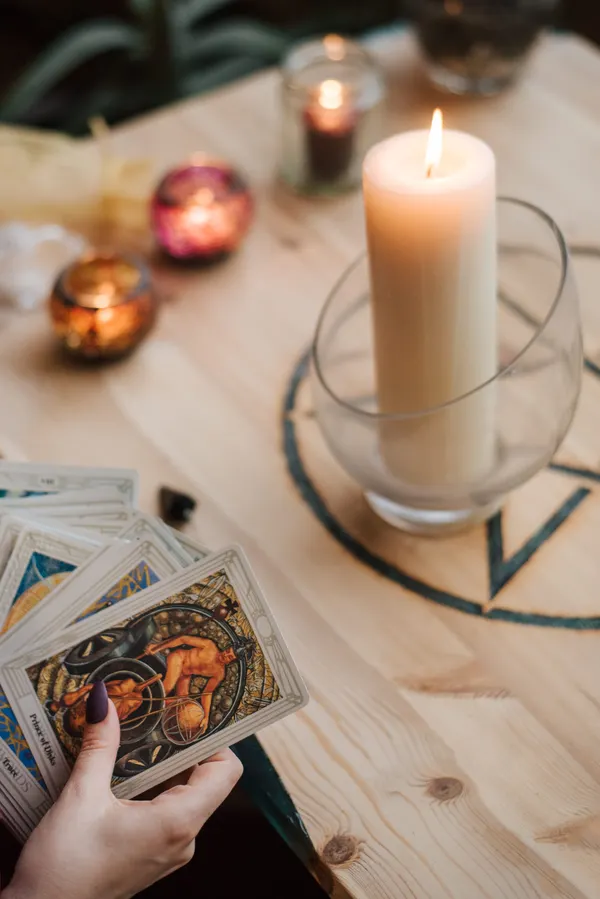
Every witch remembers her first tarot reading. Mine was at a kitchen table, with a borrowed deck and absolutely no idea what I was doing, and it still managed to tell me the truth. That is the quiet miracle of tarot: it works even when you are brand new, because the cards speak in pictures and pictures are a language you already know.
Before you shuffle, it helps to know what you are holding. Tarot began in 15th century Italy as a card game called tarocchi, played with 22 illustrated trump cards and 56 suited cards. It took centuries for the game to become a divination tool, and the deck that made that leap possible arrived in December 1909, when London publisher William Rider & Son released a new tarot designed by the mystic Arthur Edward Waite and illustrated by Pamela Colman Smith.
Here is the part of the story every tarot student should know: Smith, a Jamaican-British artist and member of the Hermetic Order of the Golden Dawn, painted all 78 cards by hand, and her great innovation was giving every single Minor Arcana card its own narrative scene. Older decks showed the numbered cards as plain arrangements of suit symbols, which meant you had to memorize meanings. Smith gave you pictures to read instead, and that single choice made tarot teachable to anyone willing to look closely. She was barely credited in her lifetime, known in tarot circles only by the nickname “Pixie,” but modern scholarship has restored her place, and many readers now call the deck the Rider-Waite-Smith in her honor. When you buy your first deck, you are almost certainly buying her artwork.
Why start with three cards
The three-card spread is the perfect first reading because it is a complete sentence: beginning, middle, end. The classic positions are past, present, and future, though you can also read them as situation, action, and outcome, or mind, body, and spirit. Three cards are enough to tell a story and few enough that you will not drown in meanings.
You do not need a silk cloth or a consecrated athame. You need a deck, a flat surface, and a question.
Doing your first reading, step by step
1. Frame one clear question. “What do I need to understand about my job search?” will serve you far better than “Tell me about my future.” Tarot answers focused questions with focused pictures. Write your question down; it keeps the reading honest.
2. Shuffle until it feels done. There is no required number of shuffles and no wrong technique. Some readers knock on the deck, some fan the cards and choose by instinct, some cut into three piles and restack. The ritual that matters is the one that tells your nervous system this is now a sacred moment. Take your time.
3. Lay three cards left to right. Card one is the past (what shaped this), card two is the present (where you stand), card three is the future (where this is heading). Turn them over slowly. Let yourself react before you analyze.
4. Read the story, not the definitions. Beginners often flip straight to the guidebook and read each card in isolation. Try this instead: look at all three cards as one scene. Is a figure in card one walking toward or away from card two? Do the colors shift from dark to light? Does someone in card three look relieved? The narrative that emerges from the images together is usually the heart of the reading. Then, and only then, check the book for details you missed.
5. Close the reading. Thank the cards, write down what you pulled and your first impressions, and note the date. A tarot journal is the single fastest way to get good at this, because in three months you will look back and see exactly which symbols were trying to tell you what.
A few honest notes
Tarot shows currents, not certainties. A reading describes where your energy is flowing right now, which means you can always change the outcome by changing your actions. That is not a flaw in the system; it is the whole point.
Also, read ethically from day one. Do not read about a third party without their knowledge, do not present a reading as medical, legal, or financial advice, and do not read when you are desperate for one specific answer, because desperation hears only what it wants. The cards deserve your calm, and so do you.
Your first deck does not need to be fancy. It needs to be yours. Hold a few in a shop if you can, notice which artwork pulls at you, and trust that tug. Then go home, light something that smells good, and lay out three cards. You already know how to read pictures. The rest is practice.
Keep walking the path: explore the Divination hub for the full discipline, read The Divination Witch Starter Guide if scrying and card-reading feel like home, or take What Kind of Witch Are You? to find where you belong.