Runes 101: Reading the Elder Futhark
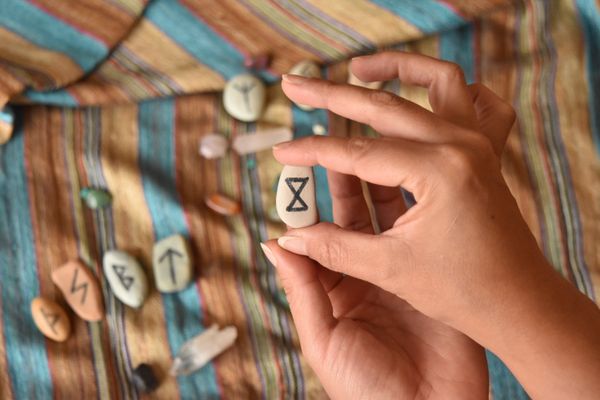
If tarot is a novel, runes are a poem: compressed, stark, and startlingly direct. Twenty-four characters, each one a word and a world, cast from a pouch and read where they fall. The Elder Futhark is the oldest runic alphabet we know, and learning to read it connects you to a divination tradition with some of the deepest roots in Europe.
The history is genuinely ancient. Runic writing emerged among Germanic peoples around the 2nd century CE, likely inspired by contact with Roman alphabets, and the earliest inscriptions we have, like those on the Vimose artifacts from Denmark, date to roughly 160 to 300 CE. The Elder Futhark’s 24 runes were used for several centuries across northern Europe before evolving into the younger, shorter alphabets of the Viking Age. The word “rune” itself is related to old words for mystery and secret counsel, which tells you exactly what these characters were for.
We should be honest about one thing: no ancient rune casting manual survives. What we know of historical rune divination comes from scattered references, like the Roman historian Tacitus describing Germanic tribes casting marked lots. Modern rune reading is a reconstruction, built from the rune poems (medieval verses describing each rune’s meaning), folklore, and living practice. That does not make it fake; it makes it a revival, like so much of modern witchcraft, and revivals can be done with rigor and respect.
Meeting the runes
The alphabet is called the Futhark after its first six runes: Fehu, Uruz, Thurisaz, Ansuz, Raidho, Kenaz. Each rune pairs a sound with a concept, and the concepts are wonderfully concrete: Fehu means cattle, which meant wealth and resources. Uruz is the wild ox: raw strength. Hagalaz is hail: disruption from the sky. Berkana is the birch: new growth. You do not need to memorize all 24 today. Start with five or six that keep appearing in your readings, learn their stories deeply, and let the rest arrive over time.
A traditional set is made of wood, stone, or bone, each rune carved or painted on a small tile. You can buy a set or make one; handmade runes, cut from a fallen branch and marked with your own hand, carry a charge no purchased set can match. Keep them in a pouch, and handle them often. Familiarity is fluency.
Your first casting: the three-rune spread
Like tarot’s three-card spread, the three-rune cast is the perfect beginner reading: past, present, future, or situation, challenge, guidance.
1. Ask one clear question. Runes reward directness. “What should I understand about this job offer?” works; “Tell me about my life” does not.
2. Shake the pouch and draw three. Some casters scatter all the runes on a cloth and read the ones that land face-up near the center. The three-draw is simpler and just as valid for beginners. Lay them left to right.
3. Read each rune’s core meaning, then read the story. Fehu (resources) followed by Hagalaz (disruption) followed by Berkana (new growth) tells a clear tale: something you counted on gets shaken, and new growth follows. Notice which runes land face-down or reversed; many readers treat reversed runes as blocked, delayed, or internal versions of the upright meaning.
4. Write it down. Date, question, runes, your interpretation. Rune journals are goldmines; patterns emerge over months that no single reading reveals.
The blank rune question
You will notice many commercial rune sets include a 25th tile: blank, unmarked. This is a modern invention, popularized by Ralph Blum’s 1982 book The Book of Runes, where it was called the Blank Rune or Odin’s Rune and read as the unknowable, fate, or the hand of the divine. Traditionalists point out, correctly, that no historical evidence supports a blank rune; the Elder Futhark has 24 characters, full stop.
Our advice: decide deliberately. Some readers keep the blank tile and read it as “not yet known” or “the question is wrong,” which can be genuinely useful. Others remove it as ahistorical clutter. Neither choice is wrong, but make it a choice, not an accident. Know why your set looks the way it does, and your readings will carry that clarity. If you are working from a reconstructionist or heathen perspective, the 24-rune set without the blank is the historically grounded option.
Going deeper
When you are ready, learn the three aetts, the three families of eight runes each, traditionally associated with different gods and themes. Study the rune poems; the Anglo-Saxon rune poem in particular is a beautiful, strange text worth reading slowly. And consider learning the historical context alongside the divination: the migration-era world that carved these characters was harsh, poetic, and deeply animist, and understanding it enriches every reading.
The runes have waited nearly two thousand years. They can wait while you learn them properly, one mystery at a time.
Keep walking the path: explore the Divination hub for the full discipline, read The Divination Witch Starter Guide if hidden alphabets thrill you, or take Where Should I Start? to find your first step.