Crystal Grids: Sacred Geometry for Focused Intention
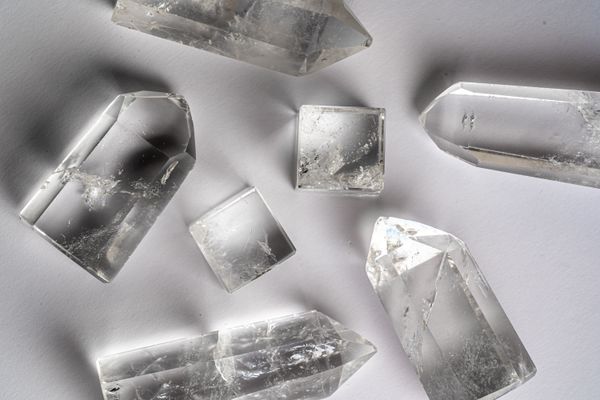
A single crystal is a tool. Several crystals, arranged with intention in a geometric pattern, become something practitioners describe as greater than the sum of their parts: a crystal grid. The idea is elegant. Stones hold and focus intention; sacred geometry gives that focus a shape; the combination creates a sustained working that keeps running while you get on with your life. Whether you understand grids as energy architecture or as a powerful focusing device, the practice is the same, and it is lovely to do.
Modern crystal grids descend from the crystal healing revival of the 1980s, when authors like Katrina Raphaell, whose Crystal Enlightenment (1985) helped define the field, popularized laying stones in patterns for healing and meditation. The geometric layouts draw on much older symbolism: the Flower of Life, the Seed of Life, and other patterns found in sacred art across cultures. The contemporary grid is thus a new practice with old bones, which describes a great deal of modern witchcraft.
How grids are said to work
The working theory has three parts. First, each stone contributes its traditional association: rose quartz for love, black tourmaline for protection, clear quartz for amplification. Second, the geometric layout organizes those contributions the way a circuit board organizes current; practitioners often describe energy flowing along the lines of the pattern. Third, the practitioner’s stated intention programs the whole arrangement, the way a single stone is programmed, but sustained across the grid’s lifetime.
You do not need to commit to the metaphysics to benefit. At minimum, building a grid is an hour of sustained, embodied focus on a single intention, which is a powerful magical act by any theory.
Laying your first grid
1. Choose your intention. One clear purpose: restful sleep, a calm home, creative focus, gentle protection. Write it down.
2. Choose your stones. Select a center stone (the anchor, usually the largest, representing the intention itself), four to eight surrounding stones (supporters, chosen for relevant associations), and optionally four tiny clear quartz points as amplifiers at the outer edge. For a calm-home grid: amethyst center, rose quartz and blue lace agate supporters, clear quartz points around.
3. Choose your layout. Beginners do well with the Seed of Life (seven overlapping circles) or a simple concentric arrangement: center stone, ring of supporters, outer ring of amplifiers. You can draw the pattern on paper, use a printed grid cloth, or lay it freehand. Precision helps but perfection is unnecessary.
4. Cleanse everything. Smoke-cleanse all the stones before you begin, and clear the space where the grid will sit.
5. Lay the grid with intention. Place the center stone first, stating your intention aloud. Add each surrounding stone deliberately, naming what it contributes. Place the amplifiers last. Work slowly; the laying is the spell.
6. Activate. The traditional activation: take a clear quartz point (or your finger) and trace an invisible line connecting the stones, starting at the center and spiraling outward, visualizing light flowing along the pattern. State your intention one final time. The grid is live.
7. Tend it. Leave the grid in place for a lunar cycle or until its purpose is fulfilled. Dust it, refresh your intention when you pass it, and dismantle it with thanks when the work is done: cleanse the stones, store them, and note the outcome in your journal.
When the grid goes quiet
Sometimes a grid you laid with great care seems to do nothing. Before you dismantle it in disappointment, run through the usual suspects. The most common is a muddy intention: “I want things to be better” gives the grid nothing to hold, so restate it sharply and reactivate. Second is stone fatigue; grids running for weeks may need their stones smoke-cleansed and the intention restated, like rebooting a slow device.
Third, and most interesting, is that the grid may be working on a level you did not ask about. Practitioners report laying an abundance grid and noticing their sleep improve, or a protection grid coinciding with an old friendship quietly ending. Record what actually changes during a grid’s lifetime, not just what you hoped would change. The pattern in your notes is often more instructive than the result you planned. And if a grid truly feels dead, dismantle it with thanks rather than frustration; a clean ending keeps the practice honest.
Grid ideas to try
- Sleep grid: amethyst center, moonstone and lepidolite supporters, beside the bed
- Protection grid: black tourmaline center, hematite and smoky quartz supporters, near the front door
- Abundance grid: citrine center, green aventurine and pyrite supporters, in the workspace
- Love grid: rose quartz center, rhodonite and clear quartz supporters, in the bedroom
Start small, with stones you already own. A three-stone triangle with a clear intention is a complete grid; the elaborate mandalas can come later. What matters is the clarity of the purpose and the care of the laying. Geometry gives your intention a shape to live in. Give it a good one.
Keep walking the path: explore the Crystal Magic hub for the full discipline, read The Crystal Witch Starter Guide if stones feel like allies, or take What Kind of Witch Are You? to find where you belong.